

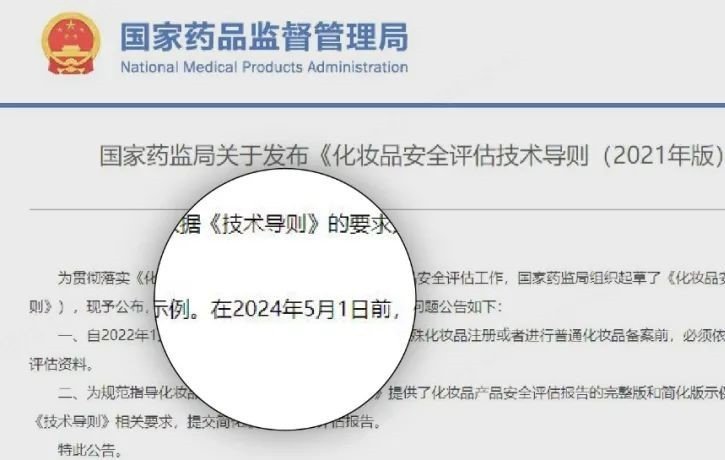
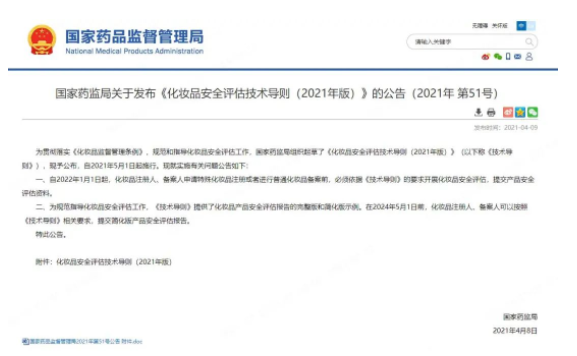
In April 2021, the National Medical Products Administration (NMPA) issued the “Technical Guidelines for Cosmetic Safety Assessment (2021 Edition)” (hereinafter referred to as the “Technical Guidelines”) and related announcements. The announcements indicate that after May 1, 2024, cosmetic registrants and filers will be required to conduct cosmetic safety assessments in accordance with the requirements of the Technical Guidelines and submit a complete “Cosmetic Safety Assessment Report”.
To adapt to this change, Enzyme Products took the lead in initiating safety assessments of raw materials for its marketed cosmetics in 2023. With the implementation of the “complete safety assessment” approaching, we invited Dr. Li Jiazhong, Vice President of Biocomputing and Head of Efficacy Research at Enzyme Products , to an exclusive interview to share Enzyme Products’ insights and practices regarding the “complete safety assessment.”
Q1. What is a cosmetic safety assessment report, and what are the differences between the full and simplified versions?
Dr. Li Jiazhong: The “Technical Guidelines for Safety Assessment of Cosmetics” (2021 Edition) issued by the National Medical Products Administration in 2021 aims to ensure the safety of cosmetics and standardize the safety assessment of cosmetics before they are marketed. These guidelines apply to both cosmetic products and raw materials. Whether simplified or complete, a safety assessment report for a cosmetic product typically includes: an abstract, product description, product formula, formula design principles (only applicable to children’s cosmetics), safety assessment of each ingredient in the formula, assessment of potentially hazardous substances, risk control measures or recommendations, safety assessment conclusions, signature and resume of the safety assessment personnel, references, and appendices.
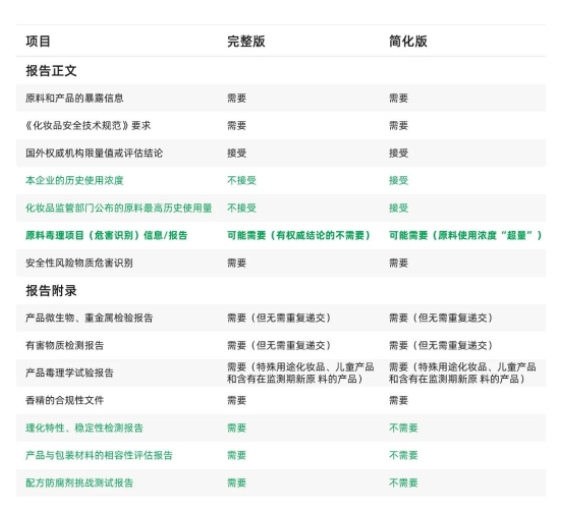
Compared to the simplified version, the complete safety assessment report will likely require toxicological information on the raw materials, risk assessment data for the raw materials (not required for raw materials with authoritative conclusions), and will also include mandatory requirements such as a preservative challenge report, physicochemical properties of the product, stability testing reports, and compatibility testing reports between the product and packaging materials . The highest historical usage levels of raw materials published by cosmetic regulatory authorities and the company’s historical usage concentrations will no longer be accepted.
Overall, the “complete safety assessment” primarily guides cosmetic companies to conduct safety evaluations of each raw material and the cosmetic product as a whole, which to some extent tests the professional level of cosmetic companies.
Q2. What impact will the “full-scale safety assessment” have on cosmetic companies? What are the main challenges?
Dr. Li Jiazhong: The implementation of the “complete safety assessment” has a significant impact on cosmetic companies. The difficulties they face are mainly reflected in the following three aspects.
Economic considerations: Even from a raw material perspective, a complete safety assessment for a single raw material costs at least 250,000 yuan. For raw material suppliers, especially multi-product companies, this is a significant expense and burden. Furthermore, for certain special raw materials, such as extracts or those with unclear active ingredients, insufficient understanding can make safety assessments very difficult, making it hard to reach toxicological endpoints.
Formulation: For cosmetic companies, each product formulation requires many raw materials. Previously, manufacturers could handle the registration process themselves, but now it requires the cooperation of the entire industry chain, necessitating reports and data from authoritative third-party testing institutions or raw material suppliers, making it extremely difficult.
Timeline: Before May 1st, registering a new product took approximately two weeks; after May 1st, it takes 3-6 months, requiring the submission of a series of materials and information. The “complete safety assessment” has lengthened the registration period for brand companies. Among the added testing items, the corrosion challenge test takes approximately 40 days; product physicochemical properties and stability testing, which confirms the existence of interactions between raw materials, takes approximately 3 months; and product-packaging compatibility testing takes approximately 3 months.
Q3. Regarding the “full safety assessment,” what suggestions do you have for cosmetic brands?
Dr. Li Jiazhong: The implementation of regulations is a fact that cosmetic companies have to face. The idea of ”filing as many as possible” and the wait-and-see attitude before the deadline are not advisable and will greatly affect the innovation and development of enterprises. Cosmetic companies must respond actively.
Safety and efficacy are like two wings of cosmetics; safety is the foundation, while efficacy is a cosmetic attribute that arises from safety. Therefore, safety is the most basic and crucial factor in cosmetics. Furthermore, the registrant bears responsibility for the entire product lifecycle. It is strongly advised that beauty brands carefully select reliable, cooperative, and truly responsible raw material suppliers who are committed to the brand and the industry, thereby fundamentally safeguarding the brand’s reputation and development.
Q4: How should we view and respond to the “complete safety assessment” for enzyme products?
Dr. Li Jiazhong: Based on the attitude and principle of being responsible to customers and consumers, we believe that a “complete safety assessment” is imperative in order to ensure the safety of cosmetics. In fact, the State Food and Drug Administration has given the cosmetics industry ample time to respond, from issuing technical guidelines in 2021 to their implementation on May 1, 2024.
As a high-quality raw material supplier, we stand firmly with cosmetic companies to jointly address the challenges brought by the “full-scale safety assessment.” Since 2023, our enzyme products have been conducting safety assessments on all our raw materials, including tests such as: acute dermal toxicity testing , repeated skin irritation testing , acute eye irritation testing , skin sensitization testing , skin phototoxicity testing , skin photosensitization testing, bacterial reverse mutation testing , in vitro mammalian chromosome aberration testing , and 28-day repeated dermal toxicity testing .
All raw materials for finished enzyme products available for sale can be provided with complete safety assessment reports, including S -Bosein, Ectoin, Ergothionein, Blue Copper Peptide, Carnosine, Acetyl Hexapeptide-8, Snake Venom Peptide, etc.
Q5. What are the advantages of finished enzyme products in terms of safety assessment?
Dr. Li Jiazhong: As a pioneer in green bioactive raw materials in the field of synthetic biology, enzyme products have a unique advantage in raw material safety assessment:
1. The founding team of our enzyme product previously worked on peptide drugs, and pharmaceuticals are a highly regulated industry. Therefore, our enzyme product team is very familiar with and experienced in the regulatory system. In the past, we have accumulated rich experience in interacting with regulatory authorities during product research and development, production, quality management, and registration application. Therefore, we can take a calm approach to the implementation of the “full-version safety assessment” and actively cooperate with it.
2. Driven by innovation, Enzyme Products pays close attention to raw material innovation in China and successfully registered acetylcarnosine, a new cosmetic raw material, in 2023. This experience in independently applying for new cosmetic raw material registrations gives Enzyme Products the capability, team, and resources to conduct comprehensive safety assessments of raw materials.
3. In addition to being used as a raw material for cosmetics, enzyme products are also actively expanding into different fields such as nutrition and health. These raw materials require comprehensive safety assessment reports during the registration and application process.
4. The raw materials for enzyme products focus on biomolecules such as peptides, proteins, sugars, and nucleic acids, which have the advantages of high safety and high activity.
Q6. It is understood that all of Enzyme Products’ products on sale can provide safety assessment reports. Why does Enzyme Products want to take the lead and make early arrangements?
Dr. Li Jiazhong: The core values of our enzyme products are “achieving customer success, growing together, embracing change, and striving for the long term,” with the first sentence being “achieving customer success”! We need to help our customers solve industry pain points and conduct comprehensive safety assessments of raw materials, which reflects our proactive commitment and sense of responsibility.
Furthermore, with the popularization and deepening of sustainable and environmental protection concepts, consumers are paying more attention to the greenness and sustainability of cosmetics while also focusing on their safety and efficacy. Enzyme Products has positioned itself as a “leader in green active ingredients.” Regarding the safety assessment of raw materials, we haven’t just planned ahead; we’ve been doing this all along because we believe it’s an inevitable path. On the one hand, it promotes high-quality and standardized development in the industry; on the other hand, it provides protection for consumers.